Explanation: An Overview of Fiscal Policy
How Governments Influence the Economy
Introduction
Fiscal policy is one of the most powerful tools a government possesses to manage a country's economic health. By adjusting levels of taxation and public spending, the government can directly influence the economy's aggregate demand and overall performance.
🏛️ What is Fiscal Policy?
Fiscal policy involves the government using taxation and public spending to influence economic activity. It serves as a primary method for the state to stabilize the economy, especially during periods of volatility.
⚡ Key Strategies in Fiscal Policy
The government typically employs two main approaches depending on the economic situation:
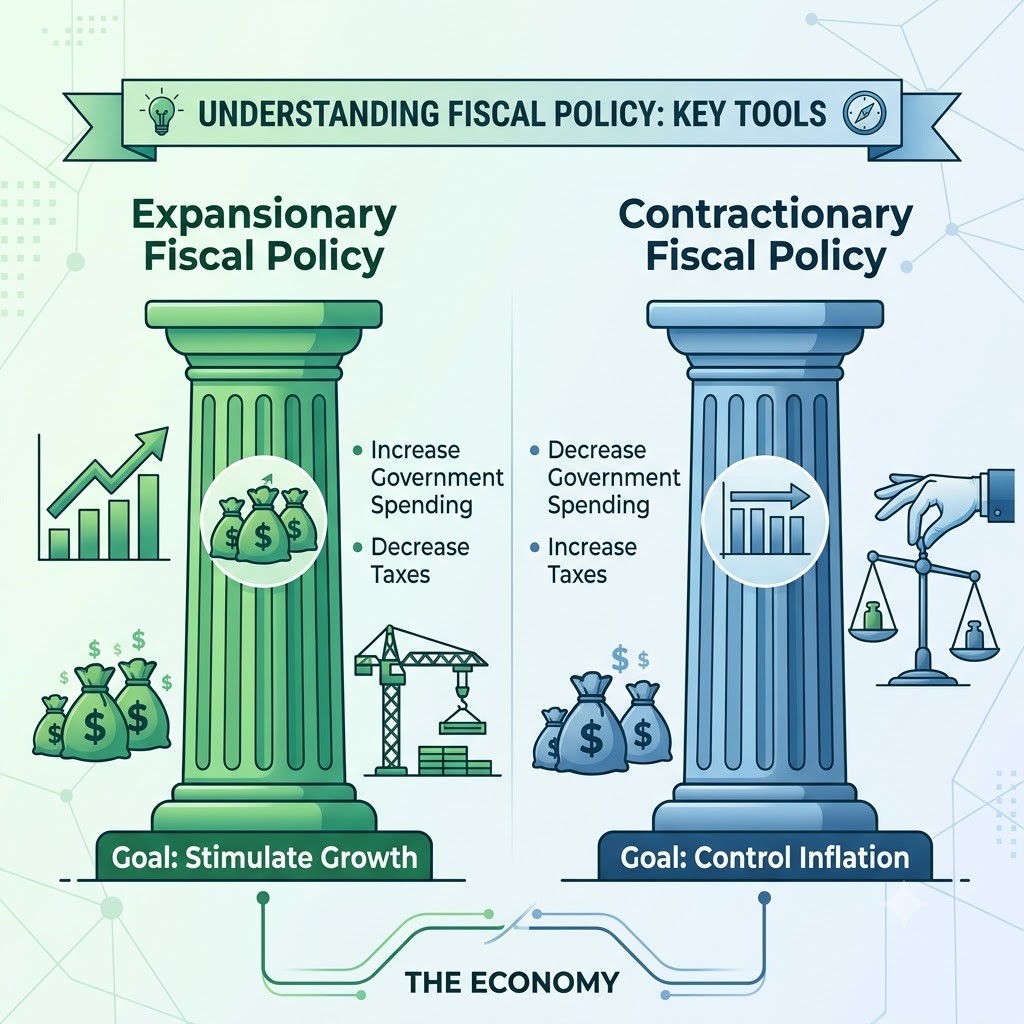
Expansionary Fiscal Policy
When it's used: Usually during a recession to stimulate economic growth.
The government achieves this by increasing public spending or reducing taxes. This puts more disposable income into the hands of consumers and businesses, thereby boosting aggregate demand.
Contractionary Fiscal Policy
When it's used: To control inflation or curb an overheating economy.
The government reduces public spending or increases taxes to lower aggregate demand. This helps stabilize prices and prevent excessive inflation.
🎯 The Impact of Fiscal Policy
The primary goal of fiscal policy is to create a stable environment for growth. When executed correctly, it helps manage unemployment rates, controls the cost of living, and ensures that the economy does not experience extreme booms or busts.
Conclusion
Understanding fiscal policy is essential for analyzing how a government responds to economic challenges. Whether it is through expansionary measures to fight unemployment or contractionary measures to tame inflation, fiscal policy remains a cornerstone of macroeconomic management.